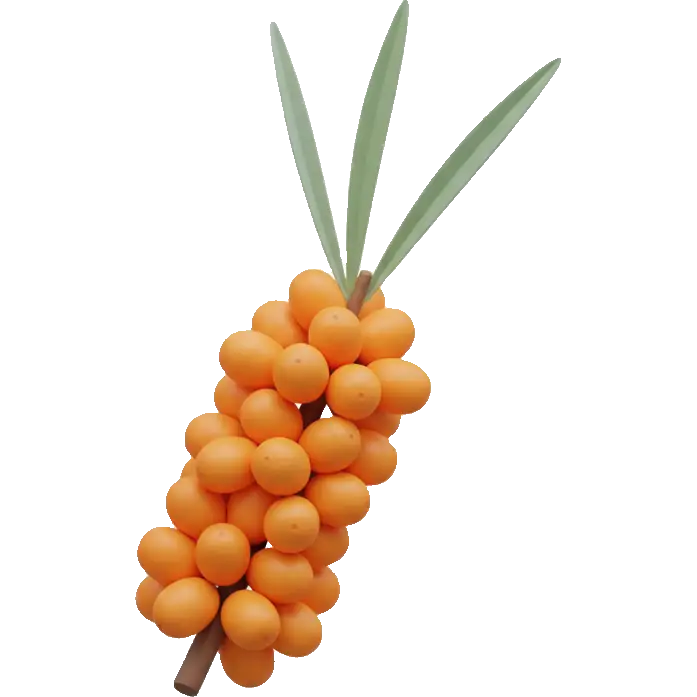
sea buckthorn
Fruit
Is sea buckthorn high in low fermentation?
Is sea buckthorn high or low in low fermentation? See its exact rating, how much counts as a portion, and its FODMAP, salicylate, oxalate and diet compatibility in one place.
Related checkers
Compare sea buckthorn across criteria
Sensitivity notes
Why low fermentation food checker matters
SIBO (Small Intestinal Bacterial Overgrowth) diets focus on reducing fermentable foods that feed bacteria in the small intestine. Low-fermentation foods help manage symptoms like bloating, gas, and abdominal discomfort.
- Low-fermentation eating reduces food for overgrown bacteria
- Meal spacing (4-5 hours) allows the MMC to clear the gut
- Avoid grazing - structured meals are better
- Some find the elemental diet helpful under medical supervision
- Address underlying causes with your healthcare provider
Sensitivities
What sea buckthorn contains
FODMAPs
Histamine & Amines
Plant compounds
Irritants
Additives
Allergens
Diet fit
Where sea buckthorn fits
Therapeutic diets
Lifestyle diets
Religious diets
What to know about sea buckthorn
Sea buckthorn is a fruit almost nobody eats as fruit. The berries cling so tightly to thorned branches that commercial harvest usually means freezing whole limbs and shaking them, and they are sour enough, around pH 2.7, that the crop reaches people as juice, cordial, syrup, powder or a capsule rather than as something you put in a bowl. Two separate things need untangling on this page. The berry is one of the richest natural sources of vitamin C in the temperate world, several hundred milligrams per 100 g depending on subspecies, many times what an orange carries, and at juice volumes that becomes a gram-scale dose of ascorbic acid with the gut consequences that implies. Separately, sea buckthorn oil is a different product entirely: the deep orange pulp oil is unusually rich in palmitoleic acid, the omega-7 fatty acid, while the seed oil is paler and mostly linoleic. The graded triggers here describe the berry, which is moderate for salicylates, mild for oxalate, nickel, free glutamates and histamine liberation, and clean for histamine content, tyramine, sulfites, nitrites, gluten, lactose and nightshade.
Watch for
- Vitamin C at supplement doses is the most likely reason sea buckthorn upsets a gut.Ascorbic acid above roughly two grams in a day causes osmotic diarrhoea, cramping and nausea in most people, and a concentrated juice or a scoop of powder gets there far more easily than food does. That is dose-dependent chemistry, not an intolerance, and it resolves by drinking less rather than by eliminating anything
- The acidity is severe even by fruit standards, from malic and quinic acid rather than citric.Undiluted sea buckthorn juice is a real proposition for reflux and for tooth enamel, which is why it is nearly always sold sweetened, blended with apple, or meant to be diluted. If you have reflux, the acid is a more plausible explanation for symptoms than any graded trigger on this page
- Moderate on salicylates, and this is a fruit that arrives concentrated.A syrup or a powder multiplies whatever the fresh berry carried, so a daily spoonful is a larger salicylate exposure than the grade alone suggests
- The oil is not the berry and should be logged separately.Sea buckthorn oil is a lipid extract taken daily for months at a time, often for skin or mucosal reasons, and nothing in the fruit grades here characterises it. Pulp oil and seed oil are also different from each other in composition, so the label matters
- FODMAP columns are unrated rather than low, and most sea buckthorn products come pre-sweetened, commonly with apple juice concentrate or sugar syrup.Those additions carry their own FODMAP load and are easy to attribute to the berry by mistake

Explore related in Fruit
Compare similar foods to build a personalized list of swaps that work for your system.


Low Fermentation Guide
Everything you need to know about low fermentation sensitivity and smart food choices.
SIBO (Small Intestinal Bacterial Overgrowth) diets focus on reducing fermentable foods that feed bacteria in the small intestine. Low-fermentation foods help manage symptoms like bloating, gas, and abdominal discomfort.
Sensitivity varies widely. What triggers one person may be fine for another. Track your reactions to find your personal threshold.
These foods are generally well-tolerated for Low Fermentation sensitivity:
View all safe options






These foods have moderate levels and may be tolerated in small amounts:





These foods are high in low fermentation and may trigger symptoms:
View full list





If you're sensitive to Low Fermentation, consider these strategies:
- 1Low-fermentation eating reduces food for overgrown bacteria
- 2Meal spacing (4-5 hours) allows the MMC to clear the gut
- 3Avoid grazing - structured meals are better
- 4Some find the elemental diet helpful under medical supervision
- 5Address underlying causes with your healthcare provider
Pro tip: Keep a food diary to track your reactions. The Triggerbites app makes this easy with automatic pattern detection.
Want personalized tracking?
Download Triggerbites to log meals, track symptoms, and discover your unique triggers.
Get the AppFAQ
Is sea buckthorn high in Low Fermentation?
Low Fermentation: moderate signal - portion size matters.
Can I still eat sea buckthorn if I'm sensitive to Low Fermentation?
Try smaller portions and space it out.
What else should I check?
Check Acidic Foods, Reflux Diet, and Low Fibre next for a fuller picture.