
soursop
Fruit
Is soursop high in salicylates?
Is soursop high or low in salicylates? See its exact rating, how much counts as a portion, and its FODMAP, salicylate, oxalate and diet compatibility in one place.
Related checkers
Compare soursop across criteria
Sensitivity notes
Why salicylates food checker matters
Salicylates are natural chemicals found in many fruits, vegetables, herbs, and spices. They're related to aspirin and can cause reactions in sensitive individuals including hives, asthma symptoms, nasal congestion, and digestive issues.
- Start by eliminating the highest sources: spices, herbs, and concentrated products
- Peel fruits and vegetables when possible to reduce salicylate content
- Fresh is usually better tolerated than dried or concentrated
- Build up tolerance slowly by reintroducing foods one at a time
- Sensitivity often improves with gut healing over time
Sensitivities
What soursop contains
FODMAPs
Histamine & Amines
Plant compounds
Irritants
Additives
Allergens
Diet fit
Where soursop fits
Therapeutic diets
Lifestyle diets
Religious diets
What to know about soursop
Soursop is the fruit the Annonaceae safety research is actually about. The other custard apples in this journal carry the family caution by association; soursop carries it directly. Annona muricata is the species named in the Guadeloupe case-control work that found an unusually high local rate of an atypical, levodopa-resistant parkinsonism among people who had eaten the fruit and drunk infusions of its leaves habitually for years, and annonacin, the mitochondrial complex I inhibitor identified as the likely mechanism, has been measured in soursop pulp and in canned soursop nectar rather than only in the seeds. One published estimate put the annonacin in a single fruit or one can of nectar at roughly a milligram per kilogram of body weight, many times the intravenous dose that produced brain lesions in rats. That is an animal comparison across a different route of administration and it is not evidence that an occasional guanabana ice cream harms anyone, but it is the reason soursop is the one Annona where the daily-habit question genuinely matters, and why a mug of graviola leaf tea every morning is a different proposition from a fruit in July. Read the trigger grades on this page with open scepticism: soursop shares its entire grade row byte for byte with unrelated seed entries, so every column here, the FODMAP ones included, is untested rather than measured.
Watch for
- Leaf tea is the heavier exposure, not the fruit.The Guadeloupe research covered soursop leaf and bark infusions as well as the fruit, and acetogenins concentrate in the leaf. There is no established safe daily amount of graviola tea, and it is the format most often drunk deliberately, every day, for months
- Graviola capsules, tinctures and concentrated extracts are sold widely as a cancer treatment.No completed human trial supports that claim, graviola appears on the US Food and Drug Administration list of fake cancer cures, and regulators have repeatedly acted against sellers who market it that way. An extract also delivers a far larger and more concentrated acetogenin dose than eating the fruit does
- The large black seeds are not food and must be removed before the pulp goes anywhere near a blender.Soursop is usually eaten as juice, nectar, sorbet or a smoothie, which makes this a live risk rather than a theoretical one. Crushed Annona seed has a long history as an insecticide and lice treatment and is a severe eye irritant
- The grade row on this page is a placeholder.It is identical to rows for foods soursop has nothing in common with, so the B for histamine and the C grades for salicylate and oxalate are not measurements of soursop and should not be used to clear or convict it. Its FODMAP columns are unrated
- Concentrated soursop preparations have been reported to lower blood pressure and blood glucose.If you take medication for either, treat teas and extracts as an active substance to raise with your prescriber rather than as an ordinary fruit




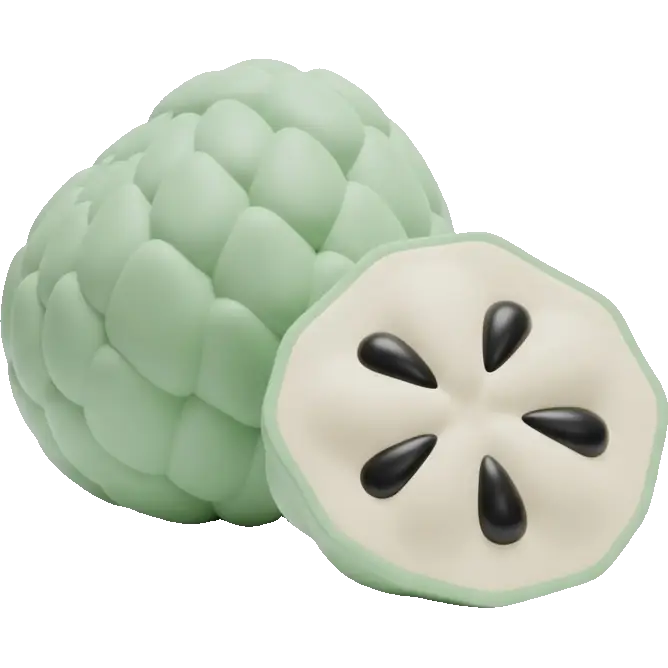

Explore related in Fruit
Compare similar foods to build a personalized list of swaps that work for your system.





Salicylates Guide
Everything you need to know about salicylates sensitivity and smart food choices.
Salicylates are natural chemicals found in many fruits, vegetables, herbs, and spices. They're related to aspirin and can cause reactions in sensitive individuals including hives, asthma symptoms, nasal congestion, and digestive issues.
Sensitivity varies widely. What triggers one person may be fine for another. Track your reactions to find your personal threshold.
These foods are generally well-tolerated for Salicylates sensitivity:
View all safe options






These foods have moderate levels and may be tolerated in small amounts:







These foods are high in salicylates and may trigger symptoms:
View full list





If you're sensitive to Salicylates, consider these strategies:
- 1Start by eliminating the highest sources: spices, herbs, and concentrated products
- 2Peel fruits and vegetables when possible to reduce salicylate content
- 3Fresh is usually better tolerated than dried or concentrated
- 4Build up tolerance slowly by reintroducing foods one at a time
- 5Sensitivity often improves with gut healing over time
Pro tip: Keep a food diary to track your reactions. The Triggerbites app makes this easy with automatic pattern detection.
Want personalized tracking?
Download Triggerbites to log meals, track symptoms, and discover your unique triggers.
Get the AppFAQ
Is soursop high in Salicylates?
Salicylates: moderate signal - portion size matters.
Can I still eat soursop if I'm sensitive to Salicylates?
Try smaller portions and space it out.
What else should I check?
Check Keto, Oxalates, and Low Salicylate next for a fuller picture.