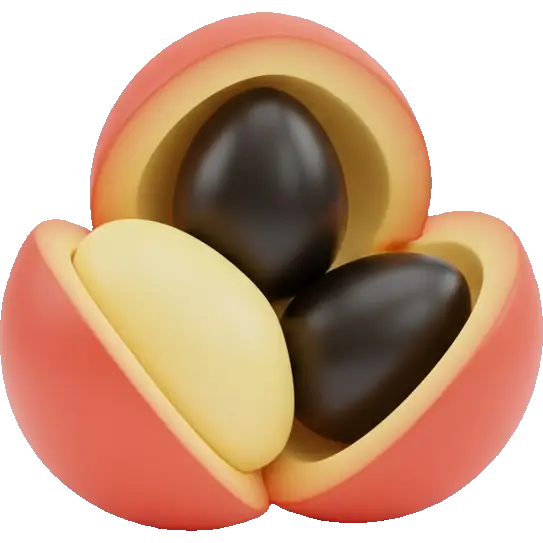
ackee
Fruit
Is ackee high in low fermentation?
Is ackee high or low in low fermentation? See its exact rating, how much counts as a portion, and its FODMAP, salicylate, oxalate and diet compatibility in one place.
Related checkers
Compare ackee across criteria
Sensitivity notes
Why low fermentation food checker matters
SIBO (Small Intestinal Bacterial Overgrowth) diets focus on reducing fermentable foods that feed bacteria in the small intestine. Low-fermentation foods help manage symptoms like bloating, gas, and abdominal discomfort.
- Low-fermentation eating reduces food for overgrown bacteria
- Meal spacing (4-5 hours) allows the MMC to clear the gut
- Avoid grazing - structured meals are better
- Some find the elemental diet helpful under medical supervision
- Address underlying causes with your healthcare provider
Sensitivities
What ackee contains
FODMAPs
Histamine & Amines
Plant compounds
Irritants
Additives
Allergens
Diet fit
Where ackee fits
Therapeutic diets
Lifestyle diets
Religious diets
What to know about ackee
Ackee is the one fruit on this site where ripeness is a safety rule rather than a taste preference. Unripe ackee contains hypoglycin A at roughly 100 to 111 mg per 100 g of aril, and eating it causes Jamaican vomiting sickness: violent vomiting followed by a profound crash in blood sugar, because the toxin blocks fatty acid oxidation and shuts down the liver pathway that keeps glucose up between meals. Severe cases progress to seizures, coma and death, and children are the most vulnerable. Once the pod ripens and splits open by itself on the tree, hypoglycin A in the aril falls away sharply to under 10 mg per 100 g, which is why properly ripened, properly cleaned ackee has been a Jamaican staple for centuries. The United States does not treat this casually either: FDA Import Alert 21-11 allows detention of ackee at the border unless the producer has qualified for the Green List, with 100 ppm hypoglycin A as the ceiling for imported product. On the ordinary food chemistry triggers ackee is quiet. It grades A for histamine, tyramine, gluten, lactose, free glutamates, sulfites, nitrites, nickel and nightshades, with a moderate C for salicylates. It also grades C for anti inflammatory value and C for DASH and Mediterranean patterns, which reflects how unusually fatty it is for a fruit rather than any chemical trigger.
Watch for
- Never eat ackee that has not opened naturally on the tree.Jamaicans describe the safe stage as the pod smiling or yawning. Forcing a closed pod open does nothing to the toxin, and a pod that refuses to split within a few days is thrown away, not prised apart
- The black seeds are toxic at every stage of ripeness and are never eaten.Discard them, and also strip off the pink or red fibrous membrane (the raphe) that joins the seed to the yellow aril, because it holds toxin the aril has already shed
- Only the yellow aril is food, and it is boiled before use.Throw the cooking water away rather than using it as a base for anything, since the traditional boil is part of how the dish is made safe
- Symptoms of ackee poisoning are not an intolerance reaction to ride out.Repeated vomiting, drowsiness or confusion after eating ackee, especially in a child, is a medical emergency and needs urgent care for hypoglycaemia
- Moderate at C for salicylates, so worth logging if you already react across salicylate rich foods, though this is a minor footnote next to the ripeness rule
- Very high in fat for a fruit, which is where the C grades for anti inflammatory value and for DASH and Mediterranean patterns come from.Ackee and saltfish also carries a heavy salt load from the salt cod rather than from the ackee itself


Explore related in Fruit
Compare similar foods to build a personalized list of swaps that work for your system.


Low Fermentation Guide
Everything you need to know about low fermentation sensitivity and smart food choices.
SIBO (Small Intestinal Bacterial Overgrowth) diets focus on reducing fermentable foods that feed bacteria in the small intestine. Low-fermentation foods help manage symptoms like bloating, gas, and abdominal discomfort.
Sensitivity varies widely. What triggers one person may be fine for another. Track your reactions to find your personal threshold.
These foods are generally well-tolerated for Low Fermentation sensitivity:
View all safe options






These foods have moderate levels and may be tolerated in small amounts:






These foods are high in low fermentation and may trigger symptoms:
View full list






If you're sensitive to Low Fermentation, consider these strategies:
- 1Low-fermentation eating reduces food for overgrown bacteria
- 2Meal spacing (4-5 hours) allows the MMC to clear the gut
- 3Avoid grazing - structured meals are better
- 4Some find the elemental diet helpful under medical supervision
- 5Address underlying causes with your healthcare provider
Pro tip: Keep a food diary to track your reactions. The Triggerbites app makes this easy with automatic pattern detection.
Want personalized tracking?
Download Triggerbites to log meals, track symptoms, and discover your unique triggers.
Get the AppFAQ
Is ackee high in Low Fermentation?
Low Fermentation: higher signal - consider smaller servings or swaps.
Can I still eat ackee if I'm sensitive to Low Fermentation?
Best to avoid or test carefully with a small amount.
What else should I check?
Check Salicylates, Inflammation, and Mediterranean next for a fuller picture.