 Back to EoE Compatible diet checker
milk
Dairy & Alternatives
Is milk eoe compatible-compatible?

See whether milk fits an eoe compatible diet, with a clear compatible-or-avoid verdict plus its FODMAP, histamine and other trigger ratings in one place.

Related checkers
Compare milk across criteria

Sensitivity notes
Why eoe compatible diet checker matters
Eosinophilic Esophagitis (EoE) dietary management often involves eliminating common trigger foods including dairy, wheat, eggs, soy, nuts, and seafood. The six-food elimination diet is commonly used to identify personal triggers.
- The six-food elimination diet removes dairy, wheat, eggs, soy, nuts, and seafood
- Systematic reintroduction with endoscopy helps identify triggers
- Milk/dairy is the most common trigger
- Work closely with your gastroenterologist and allergist
- Elemental diet may be used in severe cases

Sensitivities
What milk contains
FODMAPs







Histamine & Amines



Plant compounds




Irritants




Additives



Allergens
















Diet fit
Where milk fits
Therapeutic diets










Lifestyle diets









Religious diets






What to know about milk
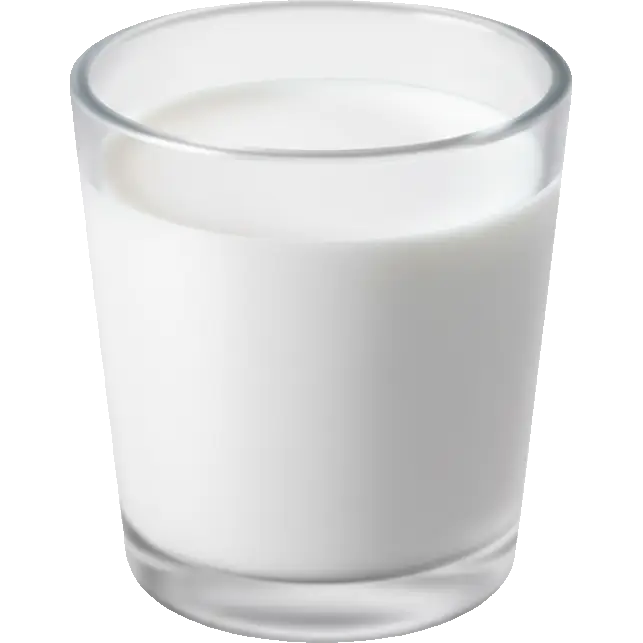
Milk carries two completely separate trigger stories, and most people blame the wrong one. Lactose, the milk sugar, is graded high and is a digestive problem: without enough lactase the sugar travels on to the colon, ferments, and returns as bloating, wind, cramps and loose stools, strictly by dose. Milk protein, meaning casein and whey, is graded high too and is an immune problem: cow's milk protein allergy shows up as hives, vomiting, eczema flares or worse, and milk grades as incompatible with an eosinophilic esophagitis elimination diet. Fresh milk is otherwise graded clean on histamine, salicylates, gluten and nickel, so when a glass of milk leaves you unwell, the sugar or the protein is almost always the answer, and which one it is decides what you can safely drink instead.
Watch for
- Graded high in lactose and high FODMAP, so a full glass is a far bigger challenge than the splash in a coffee.Lactose intolerance is dose dependent, and most people who have it still handle small amounts taken alongside food.
- Graded high in dairy protein.Casein and whey are the allergy half of the story, and they survive every process that targets the sugar, including lactase drops and lactose-free labelling.
- Graded incompatible with an EoE elimination diet.Milk is the food most often implicated in eosinophilic esophagitis and the first one taken out.
- Borderline for SIBO, where lactose that was never absorbed feeds bacteria that have crept too far up the small intestine
- Graded clean on histamine, unlike aged cheese, kefir and other long-fermented dairy, so a flushing or headache reaction to fresh milk is unusual and worth questioning







Explore related in Dairy & Alternatives
Compare similar foods to build a personalized list of swaps that work for your system.





EoE Compatible Guide
Everything you need to know about eoe compatible compatibility and smart food choices.
Eosinophilic Esophagitis (EoE) dietary management often involves eliminating common trigger foods including dairy, wheat, eggs, soy, nuts, and seafood. The six-food elimination diet is commonly used to identify personal triggers.
These foods are typically compatible with a EoE Compatible approach:
View all safe options







Practical guidance for following a EoE Compatible diet:
- 1The six-food elimination diet removes dairy, wheat, eggs, soy, nuts, and seafood
- 2Systematic reintroduction with endoscopy helps identify triggers
- 3Milk/dairy is the most common trigger
- 4Work closely with your gastroenterologist and allergist
- 5Elemental diet may be used in severe cases
Pro tip: Keep a food diary to track your reactions. The Triggerbites app makes this easy with automatic pattern detection.
Want personalized tracking?
Download Triggerbites to log meals, track symptoms, and discover your unique triggers.
Get the AppFAQ
Does milk fit an eoe compatible diet?
EoE Compatible: avoid for strict plans.
What if I eat it occasionally?
Occasional use may break strict plans.
What are safer swaps?
Compare within the Dairy & Alternatives group.