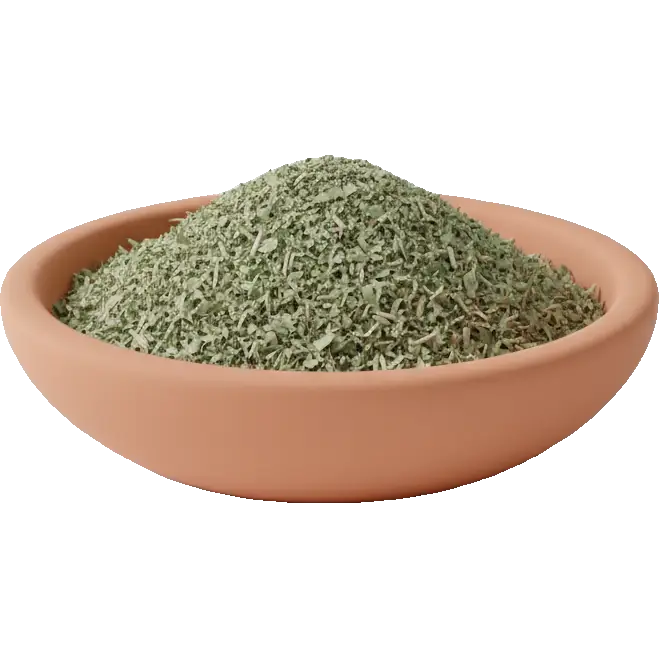
herbes de provence
Herbs & Spices
Is herbes de provence high in lactose?
Is herbes de provence high or low in lactose? See its exact rating, how much counts as a portion, and its FODMAP, salicylate, oxalate and diet compatibility in one place.
Related checkers
Compare herbes de provence across criteria
Sensitivity notes
Why lactose food checker matters
Lactose is the natural sugar in milk and dairy products. People with lactose intolerance lack sufficient lactase enzyme to digest it, leading to bloating, gas, and digestive discomfort after consuming dairy.
- Try lactose-free dairy products - they're real dairy with lactase added
- Hard aged cheeses are naturally lower in lactose
- Lactase enzyme supplements can help when eating dairy
- Yogurt and kefir may be better tolerated due to probiotics
- Your tolerance level is personal - some can handle small amounts
Sensitivities
What herbes de provence contains
FODMAPs
Histamine & Amines
Plant compounds
Irritants
Additives
Allergens
Diet fit
Where herbes de provence fits
Therapeutic diets
Lifestyle diets
Religious diets
What to know about herbes de provence
Herbes de Provence is a dried blend, traditionally thyme, savory, rosemary, oregano and marjoram, and in export versions lavender as well. It grades moderate rather than high on salicylates, which is worth knowing because the herbs inside it grade higher on their own: our rosemary and oregano entries both sit at high salicylate. The blend lands lower because a teaspoon of it spread across a whole roast is a very different dose from a handful of one herb. It is clean on gluten, lactose, FODMAPs, nickel, sulfites, nightshades and histamine content itself, with only a mild histamine-liberating tendency. For most people the real variable is not the herbs at all but what the jar has been cut with.
Watch for
- Moderate salicylate, and the components grade higher individually.If aromatic dried herbs are a known problem for you, the blend concentrates several of them at once, so judge it by how heavily you season rather than by the pinch on the label
- Read the ingredient list before you trust the FODMAP grade.Supermarket blends are frequently extended with garlic powder, onion powder or salt, and those additions carry high fructans that the pure herb mix does not
- Lavender is the giveaway that a jar was blended for the export market.It is a modern, largely non-traditional addition (it does not appear in Reboul's 1910 Provencal cookbook, and the French Label Rouge specification leaves it out), so its presence tells you the recipe is not fixed and neither is the trigger profile
- Mild histamine liberator and mild oxalate.Neither is a headline concern at seasoning quantities, but dried herb blends do concentrate what fresh herbs carry in water-diluted form
- Moderate free glutamate, part of the savoury depth dried herbs bring.It rarely matters next to the stock, cheese or tomato in the same dish






Explore related in Herbs & Spices
Compare similar foods to build a personalized list of swaps that work for your system.

Lactose Guide
Everything you need to know about lactose sensitivity and smart food choices.
Lactose is the natural sugar in milk and dairy products. People with lactose intolerance lack sufficient lactase enzyme to digest it, leading to bloating, gas, and digestive discomfort after consuming dairy.
Sensitivity varies widely. What triggers one person may be fine for another. Track your reactions to find your personal threshold.
These foods are generally well-tolerated for Lactose sensitivity:
View all safe options







These foods have moderate levels and may be tolerated in small amounts:




These foods are high in lactose and may trigger symptoms:
View full list







If you're sensitive to Lactose, consider these strategies:
- 1Try lactose-free dairy products - they're real dairy with lactase added
- 2Hard aged cheeses are naturally lower in lactose
- 3Lactase enzyme supplements can help when eating dairy
- 4Yogurt and kefir may be better tolerated due to probiotics
- 5Your tolerance level is personal - some can handle small amounts
Pro tip: Keep a food diary to track your reactions. The Triggerbites app makes this easy with automatic pattern detection.
Want personalized tracking?
Download Triggerbites to log meals, track symptoms, and discover your unique triggers.
Get the AppFAQ
Is herbes de provence high in Lactose?
Lactose: low signal for most people.
Can I still eat herbes de provence if I'm sensitive to Lactose?
Usually fine in normal portions.
What else should I check?
Check Salicylates, Low Salicylate, and Specific Carbohydrate next for a fuller picture.