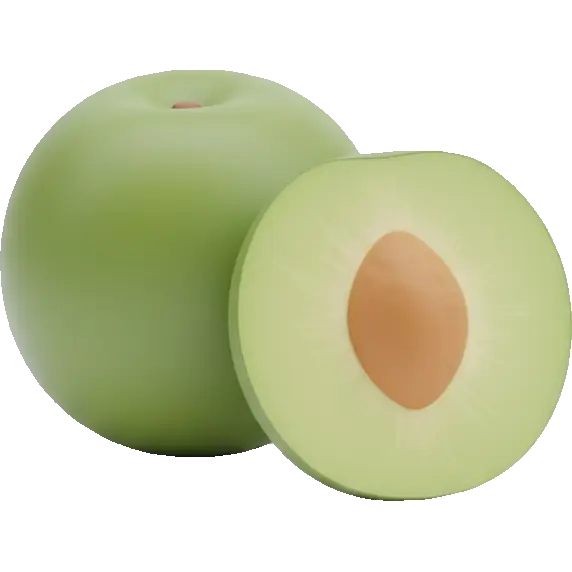
greengage
Fruit
Is greengage high in histamine?
Is greengage high or low in histamine? See its exact rating, how much counts as a portion, and its FODMAP, salicylate, oxalate and diet compatibility in one place.
Related checkers
Compare greengage across criteria
Sensitivity notes
Why histamine food checker matters
Histamine is a compound naturally present in many foods, especially aged, fermented, or preserved items. In sensitive individuals, excess histamine can cause headaches, flushing, hives, digestive issues, and other symptoms. Your body normally breaks down histamine, but some people have reduced capacity to do so.
- Focus on fresh foods - histamine builds up as food ages
- Cook and eat meals fresh; avoid leftovers sitting more than 24 hours
- Be cautious with fermented foods, aged cheeses, and cured meats
- Consider that stress and hormones can affect your histamine tolerance
- Some antihistamines or DAO supplements may help (consult your doctor)
Sensitivities
What greengage contains
FODMAPs
Histamine & Amines
Plant compounds
Irritants
Additives
Allergens
Diet fit
Where greengage fits
Therapeutic diets
Lifestyle diets
Religious diets
What to know about greengage
The greengage, or Reine Claude, is the dessert plum that stays green when it ripens and tastes like honey rather than acid. It is the opposite of the damson in every practical sense: it is eaten raw, warm off the tree, several at a time. That habit is the problem, because greengage grades at the top of our scale for both total FODMAPs and polyols, with a moderate amount of free fructose and the worst grade for fermentation in SIBO. There is no cooking step and no tartness to make you stop at one, which is how a dose-dependent trigger quietly becomes a dose.
Watch for
- Top grade for both polyols and total FODMAPs, a tier above the common plum.Sorbitol is the driver and the response scales with how many you eat
- Worst grade for SIBO fermentation, so greengage is a poor early candidate for reintroduction if you are being treated for bacterial overgrowth
- Moderate excess fructose alongside the polyols, which is the pairing that most often produces symptoms in people who tolerate other stone fruit
- Mild histamine liberator and mild salicylate grades.Individually minor, but greengages arrive in a short high-summer glut, and a large bowl of them alongside other summer fruit is exactly how those small grades stack
- Carries a mild nickel grade, worth counting only if you are managing systemic nickel allergy
- Sweetness is not a safety signal.Greengage is far sweeter and less astringent than a damson and grades a tier worse on FODMAPs, so palate is not a guide here





Explore related in Fruit
Compare similar foods to build a personalized list of swaps that work for your system.

Histamine Guide
Everything you need to know about histamine sensitivity and smart food choices.
Histamine is a compound naturally present in many foods, especially aged, fermented, or preserved items. In sensitive individuals, excess histamine can cause headaches, flushing, hives, digestive issues, and other symptoms. Your body normally breaks down histamine, but some people have reduced capacity to do so.
Sensitivity varies widely. What triggers one person may be fine for another. Track your reactions to find your personal threshold.
These foods are generally well-tolerated for Histamine sensitivity:
View all safe options





These foods have moderate levels and may be tolerated in small amounts:







These foods are high in histamine and may trigger symptoms:
View full list






If you're sensitive to Histamine, consider these strategies:
- 1Focus on fresh foods - histamine builds up as food ages
- 2Cook and eat meals fresh; avoid leftovers sitting more than 24 hours
- 3Be cautious with fermented foods, aged cheeses, and cured meats
- 4Consider that stress and hormones can affect your histamine tolerance
- 5Some antihistamines or DAO supplements may help (consult your doctor)
Pro tip: Keep a food diary to track your reactions. The Triggerbites app makes this easy with automatic pattern detection.
Want personalized tracking?
Download Triggerbites to log meals, track symptoms, and discover your unique triggers.
Get the AppFAQ
Is greengage high in Histamine?
Histamine: low signal for most people.
Can I still eat greengage if I'm sensitive to Histamine?
Usually fine in normal portions.
What else should I check?
Check FODMAPs, Polyols, and Low Fermentation next for a fuller picture.