Overview
About Split chickpeas
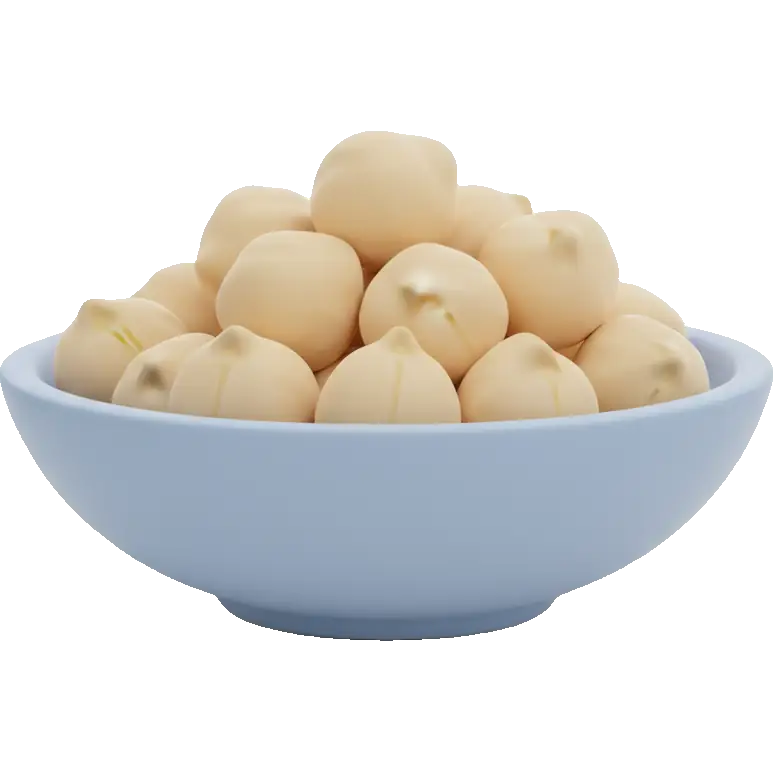
Split chickpeas, known across India as chana dal, are chickpeas that have had the hull removed and the seed split into its two halves.
That processing lets them cook down into a dal without an overnight soak, and it gives them a strikingly low glycaemic response for a starchy staple, which is why chana dal has such a long history as an everyday Indian protein. What splitting does not do is touch the sugars that cause trouble. Our data grades split chickpeas galacto-oligosaccharides E and total FODMAPs E, both at the top of the scale, because the raffinose and stachyose responsible for pulse bloating live in the cotyledon, and the cotyledon is precisely the part you keep. Nickel is graded D and lectins D, with salicylates and oxalate borderline at C. Split chickpeas are naturally gluten free and graded clean on lactose, dairy protein, nightshades, sulfites and caffeine, so for most people the whole story here is GOS.
Sensitivities
How Split chickpeas scores
Watch for
What trips people up
- Galacto-oligosaccharides graded E. The human gut makes no alpha-galactosidase, so the raffinose and stachyose in chana dal arrive intact at the colon, where bacteria ferment them into gas. This is the mechanism behind every pulse-related bloat.
- GOS are water soluble, so a long soak with the water discarded, then a boil in fresh water that also gets drained, pulls a worthwhile amount out. Chana dal is usually cooked with no soak at all precisely because it is split, so that reduction step is the one most often skipped.
- Nickel graded D. Pulses are among the largest dietary contributors of nickel, which matters if your reactions are dermatitis or systemic nickel allergy syndrome rather than gut symptoms.
- Lectins graded D. Legume lectins are broken down by a proper rolling boil, so the versions to watch are undercooked dal and anything held for hours at a gentle slow-cooker temperature without ever reaching a real boil.
- Chana dal is what besan or gram flour is milled from. If you are avoiding gluten strictly, check the brand, since besan and split chickpeas are routinely milled on shared equipment with wheat.
Diet fit
Where it fits
Swap ideas
More alternatives
FAQ
Common questions about Split chickpeas
Are split chickpeas low FODMAP?
No. Split chickpeas are graded galacto-oligosaccharides E and total FODMAPs E, the most severe grades on the scale. GOS is the dominant FODMAP in every pulse, and hulling and splitting the chickpea removes the seed coat while leaving the GOS-rich interior completely intact.
Is chana dal easier to digest than whole chickpeas?
Easier to cook and easier to chew, not easier on gas. Removing the hull strips out a lot of insoluble fibre and lets the dal break down to a puree, which genuinely suits some people. But our data grades split chickpeas higher for GOS than whole chickpeas, so if wind and distension are your symptom, splitting is not the fix.
Does soaking or rinsing reduce the gas from split chickpeas?
It helps, because GOS dissolve into water. Soak them, throw the soaking water away, boil in fresh water and drain that too, and a meaningful share of the oligosaccharides goes down the sink. It reduces the load rather than removing it, so a large bowl of dal can still cross your threshold.
Are split chickpeas gluten free?
The pulse itself is, and it is graded A for gluten. The practical caveat is supply chain rather than botany: chana dal and the besan milled from it often pass through facilities that also handle wheat, so anyone with coeliac disease should buy a brand that certifies against cross-contact.
References
Read the background
Ratings reflect the Triggerbites ingredient database and may vary with portion size and preparation.