Overview
About Duck egg
The question most people are really asking about duck eggs is whether they are a safe way around a chicken egg allergy, and the honest answer is usually no.
The major egg white allergens, ovalbumin and ovomucoid, are highly conserved across bird species, so duck egg white cross-reacts strongly with hen egg white. Skin prick testing in egg-allergic children finds roughly two in three also react to duck egg. A minority genuinely tolerate one and not the other, and there are documented cases of duck and goose egg allergy in people who eat hen eggs without trouble, but that is the exception and it is not something to test at the kitchen table. On the food chemistry side a duck egg is one of the cleaner foods we grade: clean for histamine, histamine liberation, tyramine, salicylates, gluten, lactose, nickel, sulfites, nitrites, free glutamate and nightshade, with a clean FODMAP rating and a clean SIBO score. If duck egg is a problem for you it is an immune reaction to egg protein, not a food chemical load.
Sensitivities
How Duck egg scores
Watch for
What trips people up
- Not a workaround for egg allergy. Duck egg proteins cross-react with hen egg proteins closely enough that allergy guidance treats other bird eggs as off limits unless a specialist has cleared them
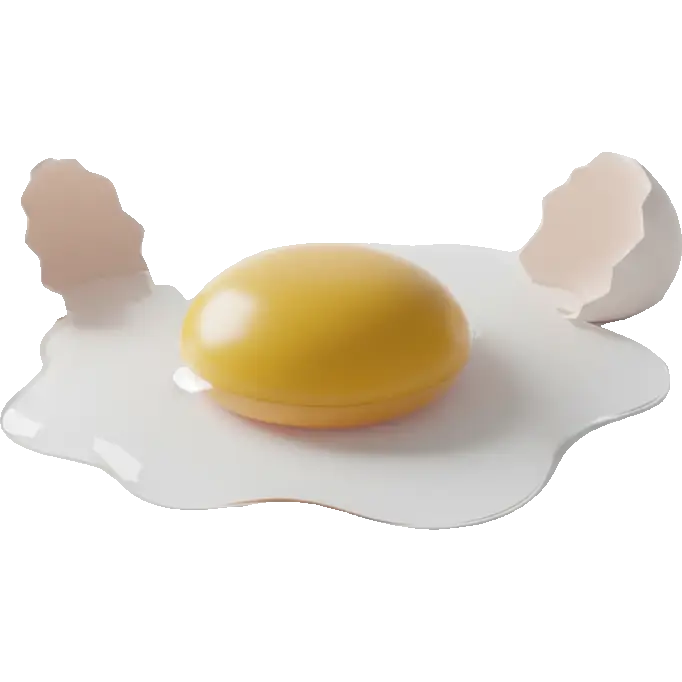
- The yolk share is bigger. A duck egg runs roughly half again the size of a large hen egg and proportionally more of it is yolk, so anyone who does badly with a large dose of egg fat is getting more of it per egg, not less
- Preserved duck eggs are a different food entirely. Salted duck egg and century egg are brined or alkaline cured for weeks, which is exactly the kind of long ageing that drives biogenic amines up, and our clean amine grades describe the fresh egg only
- Clean across the classic food chemical triggers: histamine, histamine liberation, tyramine, salicylate, nickel, sulfite, free glutamate, gluten and lactose all grade safe, and it is clean on every FODMAP group
- Rates pro-inflammatory and does not fit AIP or an egg-free elimination protocol, which are diet pattern notes rather than sensitivity triggers
Diet fit
Where it fits
Swap ideas
More alternatives
FAQ
Common questions about Duck egg
Can I eat duck eggs if I am allergic to chicken eggs?
Assume not. Ovalbumin and ovomucoid, the two proteins that drive most egg allergy, are very similar between hen and duck, and skin prick studies put cross-sensitisation to duck egg white at around two thirds of hen egg allergic children. That leaves a real minority who tolerate duck egg, and separately a small number of people who react to duck or goose egg while eating hen eggs happily, so the two are not perfectly interchangeable in either direction. Either way it is a question for a supervised challenge, not a home experiment.
Are duck eggs high in histamine?
No. A fresh duck egg grades clean for both histamine content and histamine liberation, and clean for tyramine as well, which makes it one of the more usable proteins on a low-histamine plan. The caveat is preservation rather than the egg: salted duck eggs and century eggs are cured for weeks and that ageing process is the sort that raises amines, so they should be treated as a separate food.
Are duck eggs low FODMAP?
Effectively yes. Duck egg grades clean on FODMAPs overall and on every individual fraction we track, so no fructans, no GOS, no excess fructose, no polyols and no lactose. It also grades clean for SIBO. If a duck egg dish upsets your gut, look at what it was cooked in, since butter, cream and onion or garlic in the pan all carry loads that the egg itself does not.
Are duck eggs easier to digest than chicken eggs?
Our data gives no reason to think so. Duck egg and hen egg grade the same across essentially every trigger we track: both clean on histamine, amines, salicylate, lactose, gluten, nickel and FODMAPs. The real differences are size, a richer and larger yolk, a firmer white, and a slightly different flavour. People who report doing better on duck eggs are usually reacting to the size and fat content or to an individual protein difference, not to a lower trigger load.
References
Read the background
Ratings reflect the Triggerbites ingredient database and may vary with portion size and preparation.