Foods containing fish: the complete list, and where it hides
Worcestershire sauce, Caesar dressing, kimchi and half the curry pastes on the shelf. The fish nobody mentions is the problem.
Fish allergy is one of the fourteen allergens European law requires on a label, and it is one of the few that usually arrives in adulthood and stays for life.
The obvious sources are easy to avoid. People get caught out by fish in things that are not sold as fish: the sauce, the dressing, the stock cube, the thing that tastes savoury for reasons nobody mentions.
Below is every ingredient our database grades as containing fish, and where it hides.
Fish allergy and shellfish allergy
People often mix up fish allergy and shellfish allergy, and they are separate. Fish allergy is a reaction to a protein called parvalbumin, found in finned fish. Shellfish allergy is a reaction to tropomyosin, found in crustaceans and molluscs. The proteins are unrelated, so being allergic to one says nothing about the other, and plenty of people react to prawns and eat salmon happily.
Parvalbumin is heat-stable.1 Cooking does not destroy it, and steam carrying it from a pan is enough to cause a reaction in some people. This is why fish allergy is one of the few where the kitchen itself can be the problem.
The foods most people know about
These are the fish themselves, and the everyday foods that carry fish without saying so on the front of the pack.

The complete list
This is every ingredient our database grades as containing fish, and each one links to its own page.
| Food | Notes |
|---|---|
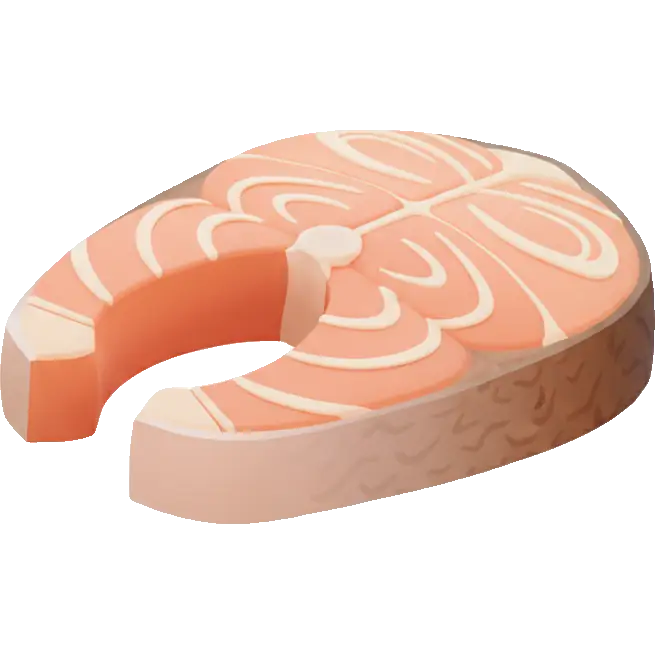
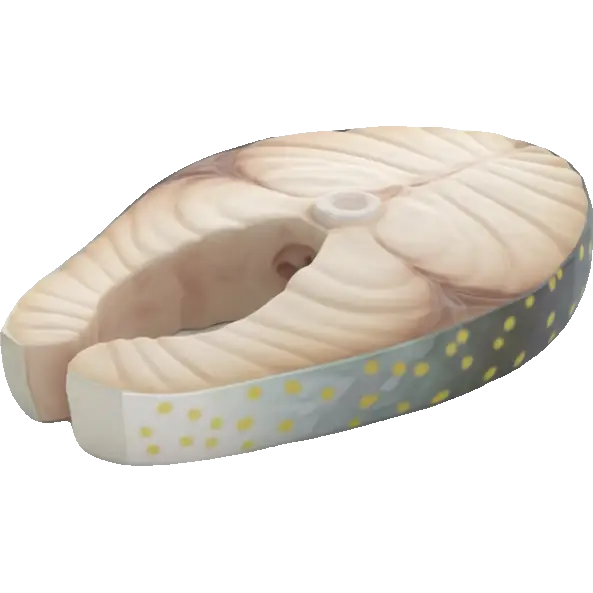
| Salmon | Salmon is a popular fatty fish. A pink-fleshed fish rich in omega-3 fatty acids. |
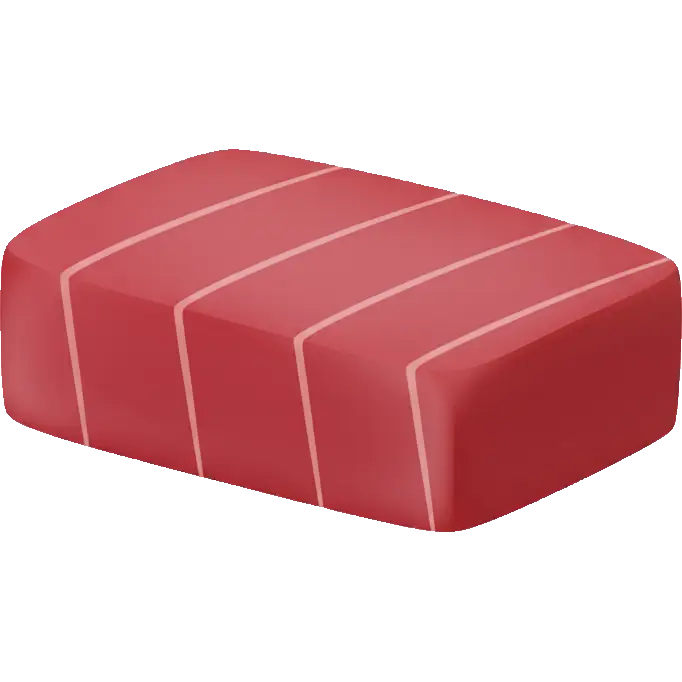
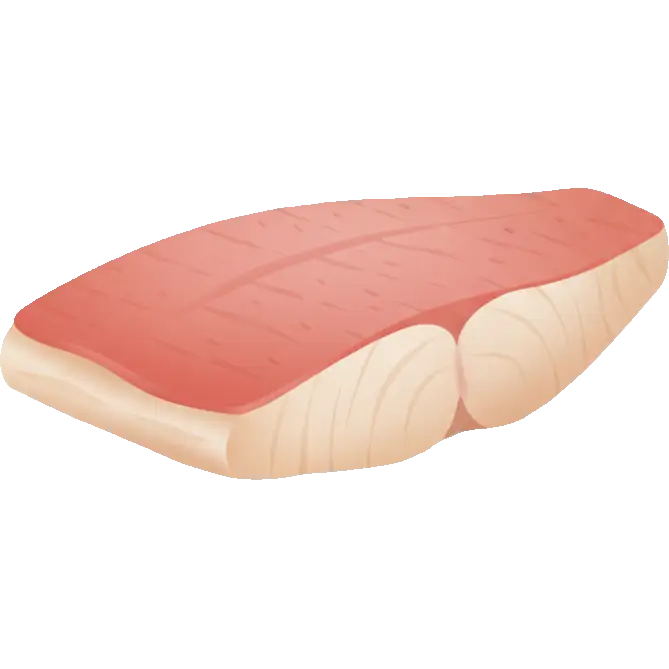
| Tuna | Low FODMAP protein. Canned/fresh tuna can cause scombroid (histamine) if mishandled; also a good omega‑3 source. |
| Caesar dressing | Classic Caesar uses anchovy, egg yolk, Parmesan and garlic (fructans) → not vegan/vegetarian and often high FODMAP. Fish, egg & milk are major allergens. |
| Flounder | Lean white fish; FODMAP-free. Ensure very fresh to avoid histamine build-up. Excluded on 6-FED (fish/shellfish). |
| Worcestershire sauce | Low-FODMAP in small serves but can contain barley malt vinegar (gluten) and anchovies; choose GF-labelled versions. |
| Whitefish | Generic white fish (cod, haddock, etc.) are FODMAP-free proteins; fresher fish means lower histamine. |
| Pollock | Lean white fish; FODMAP-free. As with other fish, histamine rises with poor storage—eat fresh. |
| Bass | White fish (like bass) is FODMAP-free and protein-rich. Ensure freshness to minimise histamine formation. |
| Mackerel | Oily fish rich in omega-3; FODMAP-free. Ensure freshness to avoid histamine issues. |
| Tilapia | Lean white fish; low FODMAP. |
| Kimchi | Fermented cabbage with garlic/chili; high in biogenic amines (histamine/tyramine). GF unless wheat flour added. |
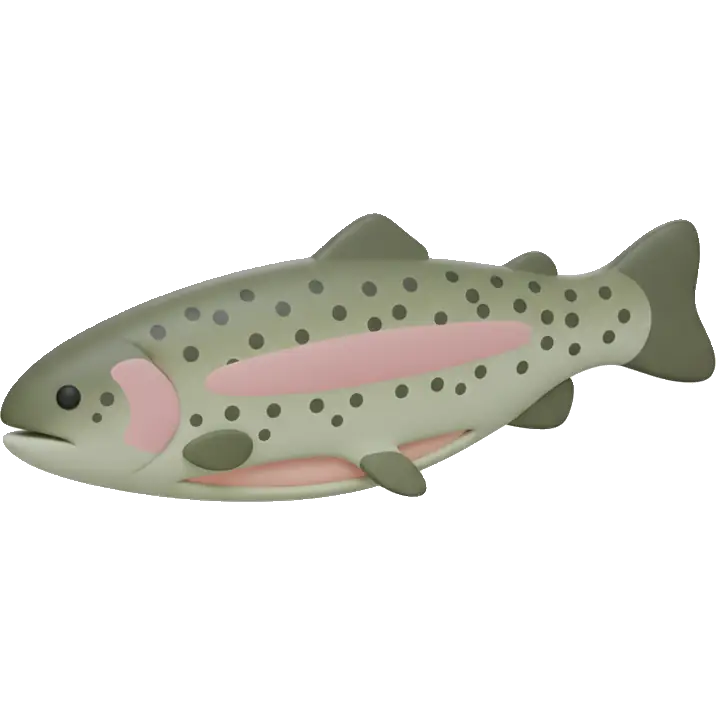
| Trout | Fish is FODMAP‑free; ensure freshness to reduce histamine risk. |
| Sole | Default mapping by category; specific lab data limited—use conservative portions. |
| Fish sauce | Fermented condiment; carbohydrate content is low but biogenic amines (histamine/tyramine) can be high. Check brand for added sugar/gluten. |
| Haddock | Fish is FODMAP-free; oily species provide omega-3s; ensure freshness to avoid histamine issues. |
| Snapper | Lean white fish; naturally low-FODMAP. Histamine issues arise mainly if mishandled (scombroid). |
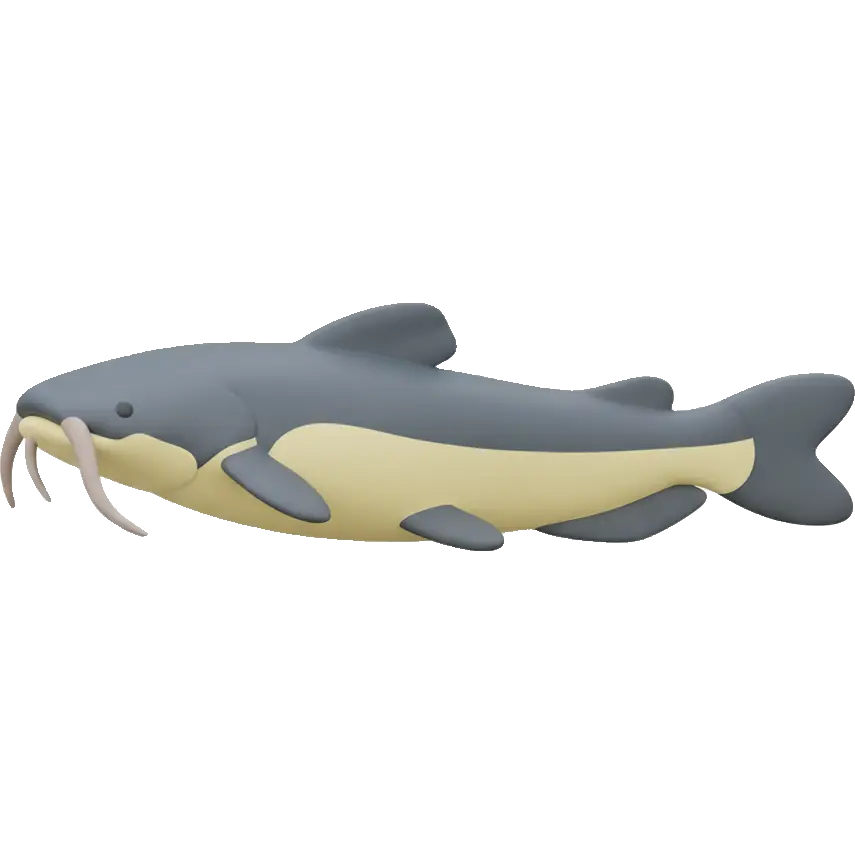
| Catfish | Plain fish is FODMAP‑free; general histamine cautions apply as with other fish. |
| Halibut | Fish is FODMAP-free; oily species provide omega-3s; ensure freshness to avoid histamine issues. |
| Sardines | Sardines are small oily fish. A nutritious fish often canned in oil or sauce. |
| Mahi-mahi | Lean fish; FODMAP‑free. |
| Anchovy | Plain fish is FODMAP‑free; anchovies are often fermented/salted and can be high in histamine/tyramine—avoid if histamine‑intolerant or on MAOIs. |
| Bream | Bream is a freshwater or sea fish. A mild white fish popular in Mediterranean cuisine. |
| Herring | Fish is FODMAP-free; oily species provide omega-3s; ensure freshness to avoid histamine issues. |
| Grouper | Fish is FODMAP-free; oily species provide omega-3s; ensure freshness to avoid histamine issues. |
| Yellowtail | Fish = FODMAP-free protein; ensure freshness to reduce histamine risk. |
| Pike | Lean freshwater fish; FODMAP-free. Keep very fresh to avoid histamine build-up. |
| Carp | Plain fish is FODMAP‑free; as with all fish, histamine issues relate to improper storage. |
| Bonito | As fish/bonito flakes: FODMAP‑free but very high in natural glutamate (umami) and biogenic amines; watch histamine intolerance. |
| Perch | Lean white fish; no carbs (FODMAP-free). Freshly cooked is low histamine; avoid if not very fresh. |
| Rockfish | Lean white fish; low-FODMAP. Histamine issues mainly if not kept cold (scombroid risk applies broadly). |
| Anchovy paste | Concentrated anchovy with salt/oil; same histamine/tyramine caveats; check labels for added garlic. |
| Hake | Fish is FODMAP-free; oily species provide omega-3s; ensure freshness to avoid histamine issues. |
| Shark | Lean fish (FODMAP-free). Note: large predatory fish like shark tend to be high in mercury—avoid in pregnancy and limit generally. |
| Eel | Seafood is naturally FODMAP‑free; freshness/handling important for histamine‑sensitive folks. |
| Sablefish | Also called black cod. Fatty fish rich in omega-3s; FODMAP-free. As with all fish, histamine forms if not kept cold. |
| Sturgeon | Plain fish is FODMAP-free; ensure freshness to avoid histamine issues. |
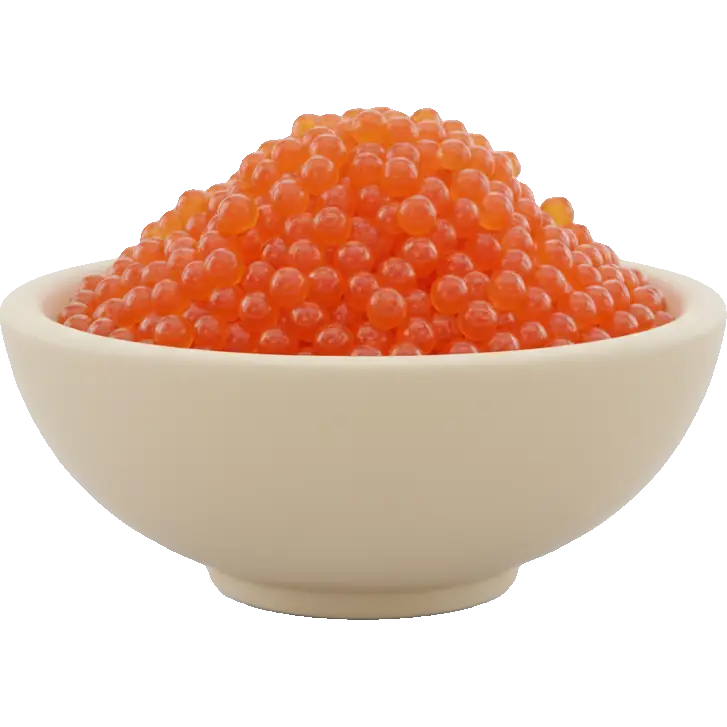
| Tobiko | Flying fish roe; very low carbs; may contain colorants/preservatives; some histamine risk as with other seafoods. |
| Barracuda | Fish is FODMAP-free. As with all fish, improper storage can lead to histamine (scombroid) poisoning—buy fresh and refrigerate promptly. |
| Turbot | Fish are FODMAP-free protein. Histamine can form if not kept cold; choose very fresh fish. |
| Pompano | Rich, delicate fish; FODMAP-free. Handle and cook fresh to minimize histamine. |
| Tilefish | Low FODMAP, but **avoid for pregnancy/children** due to high mercury classification. |
| Wahoo | Lean white fish; FODMAP-free protein. Freshness matters to minimize histamine. |
Where fish hides
Worcestershire sauce contains anchovies. So does traditional Caesar dressing, and most Caesar salads in restaurants.
Fish sauce is the backbone of a great deal of South East Asian cooking, and it does not always announce itself on a menu. Kimchi frequently contains it. So do many curry pastes, Thai ones especially.
Stock cubes, bouillon and gravy granules sometimes contain fish extract. Tapenade and some olive spreads contain anchovy.
Omega-3 supplements are usually fish oil. Vitamin D supplements sometimes are.
Some wines and beers are fined with isinglass, made from fish swim bladders, though the amount reaching the glass is generally considered too small to react to. Some imitation crab contains real fish, because surimi is made from white fish.
Cross-contact worth knowing
A shared fryer is the classic problem. Chips cooked in oil that has fried battered fish carry enough protein to cause a reaction, and this is one of the most common causes of a reaction in a restaurant that thought it was being careful.
Fishmonger counters and shared grills carry the same risk. Ask whether something was cooked on a surface used for fish, as well as what is in the dish.
Living with it
Fish allergy is usually lifelong. Children often outgrow milk and egg allergy; fish allergy tends to stay. It is also one of the more common causes of anaphylaxis in adults, so if you have been diagnosed, carry your adrenaline auto-injector every time.
Being allergic to one fish does not mean being allergic to all of them, though many people are, and testing individual species with an allergist is worth doing before you avoid the whole category.
Journal your day in 30 seconds, find your triggers.


Check any food in seconds
The fish checker grades any food in our database, and every food on this page links to its own page.
Where Triggerbites fits in
Triggerbites checks products against all fourteen EU allergens, fish among them. Scan a barcode, say a brand name or photograph the ingredients label, and the app shows you what the product declares.
For a diagnosed fish allergy that is a shopping aid, and no label tool sees cross-contact. For the reactions that keep happening when you did everything right, you need a record of what you ate and where. You journal your day in plain words or by voice, in about 30 seconds: "porridge and a coffee at home, a burger and chips at the pub for lunch, a Caesar salad for dinner, itchy mouth and hives after lunch." Over a few weeks that record is what finds the shared fryer, and you can export it as a PDF for your allergist.




Triggerbites Features
- Log your day in 30 seconds: Text, voice or photo. Log as you go, or recap it all in the evening.
- Your food, broken down: Meals become ingredients and sensitivity profiles: histamine, salicylates, FODMAPs, allergens, and even the additives on packaged food.
- Everything in the same journal: Symptoms, supplements, sleep, stress, exercise and mood, beside what you ate.
- See what repeats over time: Patterns between what you eat and how you feel, including delayed reactions that show up days later.
Common questions
Is fish allergy the same as shellfish allergy?

No. Fish allergy is a reaction to parvalbumin in finned fish. Shellfish allergy is a reaction to tropomyosin in crustaceans and molluscs. The proteins are unrelated, so plenty of people react to prawns and eat salmon happily.
Where does fish hide in everyday food?
Worcestershire sauce and traditional Caesar dressing both contain anchovies. Fish sauce appears in kimchi and many curry pastes. Stock cubes and gravy granules sometimes contain fish extract, and omega-3 supplements are usually fish oil.
Does cooking destroy the fish allergen?
No. Parvalbumin is heat-stable, so cooking does not remove it. Steam carrying it from a pan is enough to cause a reaction in some people, which makes fish one of the few allergies where the kitchen itself is a risk.
Can I eat chips cooked in a shared fryer?
Not safely. Oil that has fried battered fish carries enough protein to cause a reaction, and a shared fryer is one of the most common causes of a reaction in a restaurant that thought it was being careful.
Do children outgrow fish allergy?
Usually not. Unlike milk and egg allergy, fish allergy tends to arrive later and stay for life. It is also one of the more common causes of anaphylaxis in adults, so carrying an adrenaline auto-injector matters.
Am I allergic to all fish if I react to one?
Not necessarily, though many people are. Testing individual species with an allergist is worth doing before you avoid the whole category, because the protein varies between species.
Live, love, log. 🧡
References
- 1Ruethers T, et al. "Seafood allergy: a comprehensive review of fish and shellfish allergens" Molecular Immunology, 2018PubMed
 PubMed
Article References and Citations
- Ruethers T, et al.: "Seafood allergy: a comprehensive review of fish and shellfish allergens", Molecular Immunology, 2018 - https://pubmed.ncbi.nlm.nih.gov/29858102/